By Sr. Cleopatra Nakwenda RSC, Monze CNCS Hub
Catholic Sisters in Chikuni are deepening their understanding of the Easter season through a Seder meal and reflections on the Easter Triduum led by Fr. Gregory Mulobela SJ, who says the Christian celebration is rooted in the Jewish faith tradition.
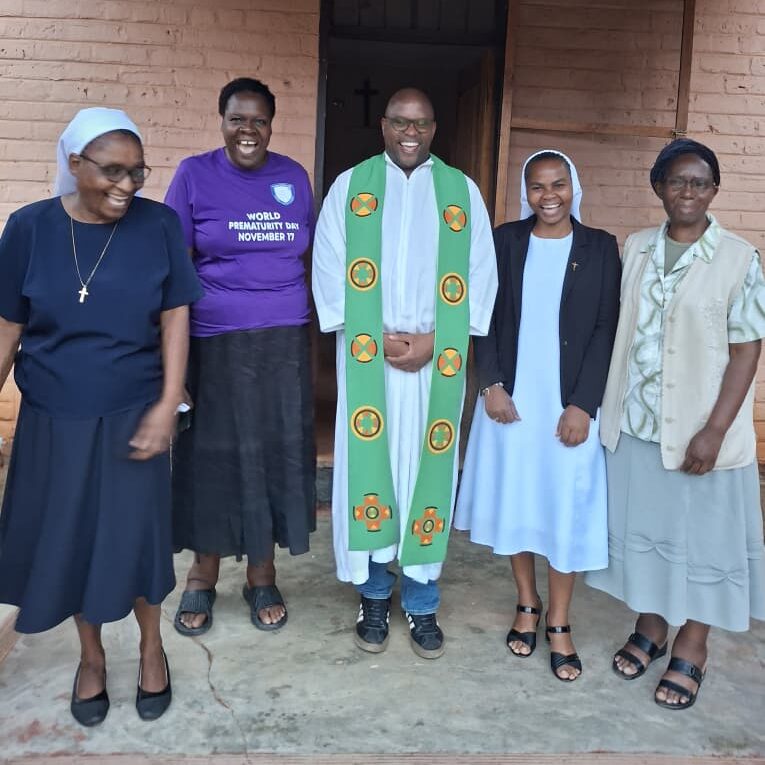
The Religious Sisters of Charity in Chikuni Community held the symbolic Seder meal on Holy Thursday as part of their preparation for Easter, the most significant feast in the Christian Liturgical year. Fr. Gregory Mulobela, Rector of the Society of Jesus in Chikuni Mission and Parish Priest of Mary Immaculate Parish, presided over the gathering.
The Seder meal, inspired by the Jewish Passover, included symbolic foods such as unleavened bread, wine, bitter herbs and lamb, connecting the story of Jesus’ Last Supper to themes of liberation and redemption in the Jewish tradition. Participants reflected on Jesus’ love, sacrifice and promise of new life.
“Our Paschal Triduum is not a replacement of the Jewish covenant, but a grafted branch and we wish to honor the root that sustains us,” said Fr. Mulobela.
He explained that the Seder offers a learning experience for Christians, helping them step into the historical and spiritual context of Jesus’ life.
“Jesus was a Jew, and the Last Supper, the foundation of the Eucharist, was almost certainly a Passover meal, a Seder,” he said.
Fr. Mulobela emphasised that the focus of the Seder is to understand the Jewish roots of Christianity rather than to reenact the Last Supper.
“We are guests at the table of a living faith tradition, seeking to understand the rituals, prayers and foods that formed Jesus’ spiritual life,” he said.
He cautioned against treating the Seder as a direct reenactment of the Last Supper, noting that such an approach would be historically inaccurate.
“Christians wants to hear the words of the last supper, this is my body … this is my blood, not as abstract theology, but as a radical reinterpretation of the traditional Passover symbols that Jesus and his disciples would have had right in front of them, may our participation in the Seder be a profoundly moving experience of connection, making the scriptures come alive in a new and tangible way,” he prayed.
During the same event, Fr. Mulobela called on the Sisters to fully participate in the Easter Triduum, describing it as one continuous liturgy rather than separate services.
“The Easter Triduum is not simply three separate services, but one single liturgy unfolded over three days,” he said.
He explained that the Triduum begins on the evening of Holy Thursday and concludes with evening prayer on Easter Sunday, with the liturgy remaining open until the Easter Vigil concludes.
Fr. Mulobela likened the Triduum to a river flowing through three stages: the outpouring of love on Holy Thursday, the suffering and silence of Good Friday and the celebration of new life at the Easter Vigil.
He encouraged the Sisters to approach the Triduum prepared, particularly through the sacrament of confession.
“You will draw even more profit from the Triduum experience if you go to confession. If you haven’t gone during Lent, go before the Triduum begins. Enter the Triduum free from the weight of unconfessed sin, so that you can walk through the darkness of Good Friday into the light of Easter unburdened,” he said.
Fr. Mulobela also stressed the importance of participating in the Easter Vigil, describing it as central to understanding the full meaning of Easter.
“To truly appreciate the Triduum, you must see it as a whole. If you go only to Easter Sunday morning Mass, you get the celebration but miss the rescue. Easter Sunday is a beautiful, crowded, joyful Mass but it is the aftermath. The Easter Vigil is the event itself,” he said.
He added that experiencing each stage of the Triduum, from the washing of feet on Holy Thursday to the silence of Holy Saturday, enables Christians to fully grasp the meaning of the Resurrection.
“When you do this, my Sisters, Easter Sunday morning becomes not just a holiday, but a feast of relief, the victory lap after a long, hard-fought battle,” he said.
The reflections concluded with a call for Catholics to enter Holy Week with openness and intention, embracing prayer, fasting and confession as pathways to renewal in faith, hope and love.