
DAUGHTERS OF THE REDEEMER ORGANIC FARMING
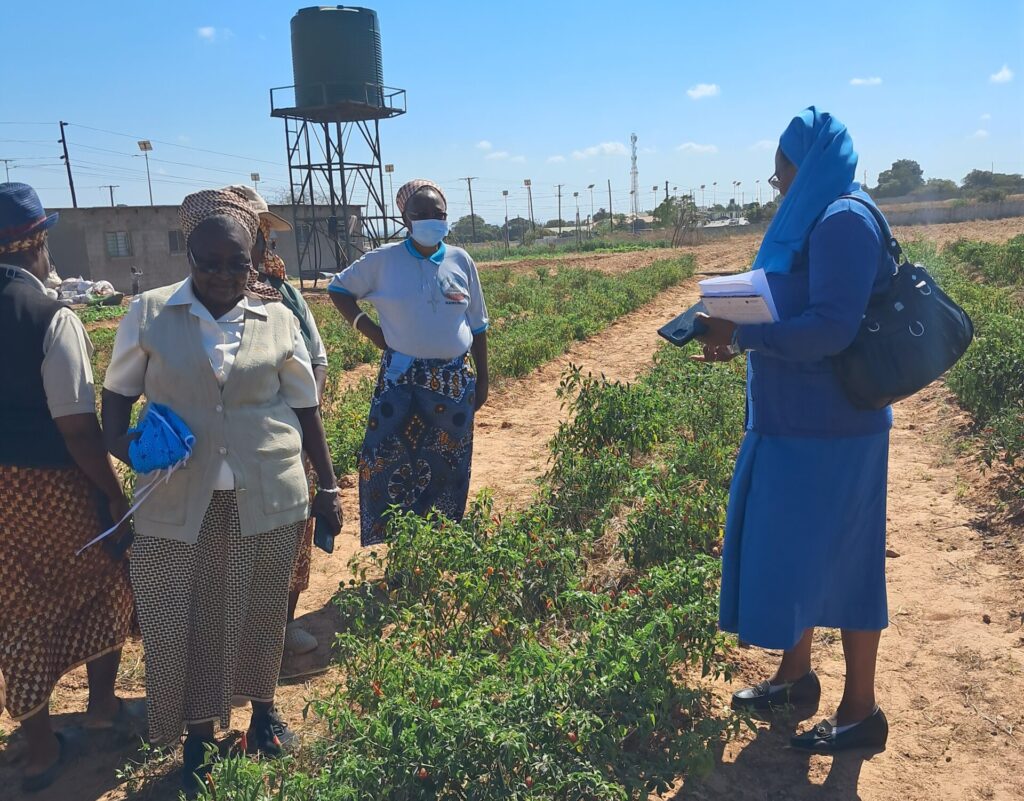
The Catholic sisters in Zambia are engaged in different activities and apostolates. The Daughters of the Redeemer who have been in existence for more than 50 years have taken up an organic vegetable farming initiative under the Conrad N. Hilton Foundation sisters blended value programme. The organic vegetable farm, which started slightly earlier before the Conrad N. Hilton foundation’s blended value program is as a result of the congregation’s experience during the advent of the covid-19 pandemic. The Daughters of the Redeemer projects coordinator Sr. Matilda Mubanga has disclosed that during covid-19, the congregation’s enterprises, a school and conference centre, which were a source of income were closed. She says as a result, the congregation had to come up with an alternative enterprise as a source of income to sustain the congregation. During the covid-19 pandemic, the savings of the congregation were getting depleted because we fell back on what we had saved, so now, we were saying, what next, if we deplete our reserves, so the idea of coming up with a vegetable garden was discussed, we said since we have land which had not been utilised, we could put it to use and see how it could help the congregation and that’s how the organic vegetable farm started. Sr. Matilda Furthermore, she adds that the congregation also looked at how it could help the members of the community who were also struggling just like them during covid-19. She says the congregation therefore, decided to employee single mothers from the neighbouring N’gombe compound who were facing financial difficulties. And Sr. Rose Nyondo, one of the founding members of the Daughters of the Redeemer, says she is elated to be part of the farming enterprise which has been helped by Conrad N. Hilton Foundation. She says that when the congregation started, it did not have much, so going into farming is one way of improving the congregation’s financial base. She adds that the farming project is one of the projects the congregation is running not only to help them but also the people they work with. Part of our charism is to work with Jesus in the poor. We work with women and subsistence farmers who start their projects on a very small piece of land and then they expand on it. Sr. Rose Nyondo Meanwhile, Daughters of the Redeemer assistant superior general and councillor in charge of projects Sr. Grace Fundafunda says that the initiative has enriched the congregation as it has given the sisters vital knowledge they need in farming. Sr. Grace notes that the sisters are now able to showcase the skills they have gained by putting into practice what they have learnt. I would like to thank and appreciate Conrad N. Hilton Foundation, ACWECA and Strathmore university for coming up with this initiative that has really helped us as a congregation. When the sisters were writing the business plan you could see their involvement, the knowledge they were gathering and after the training how dedicated they are to their work so much that even those of us who did not go for the training, are benefiting from the knowledge they have acquired. Sr. Grace And the farm Manager, Sr. Rosemary Bwalya, who is one of the sisters who took part in the training says that before the Conrad N. Hilton Foundation sisters blended value training, the farming practices they were using on the farm were not good, as such the training programme has helped them to acquire the knowledge and skills, they need in running the farm using the best farming practices. She adds that the training has brought about immense improvement on the farm as the sisters now have the knowledge on how to manage the crops, identify when to plant certain crops and when they are needed. She notes that the training has also helped her realise the importance of networking, working with different people, sharing of ideas, planning and working as a team. And Sr. Namakau Lilandwe who is also one of the trained sisters and congregational bursar explains that, at the beginning they started with one hector on a land that is about eight hectors, on which they planted about 2,000 cabbages, some tomatoes and different vegetables and from the sales of these crops they were able to pay the women they are working with, buy some farming equipment and also sink a second borehole at the farm. She adds that they have moved from one hector to four hectors, and they are able to plant different types of crops and also employee more women. She says there is an income coming in every month which has helped the congregation to support other activities such as the formation houses and buy farming inputs.